ANALYZING THE GAMEPLAY & ART DIRECTION RESIDENT EVIL 4 REMAKE
Post Category: Analysis
Resident Evil 4: Capcom's Best Remake?
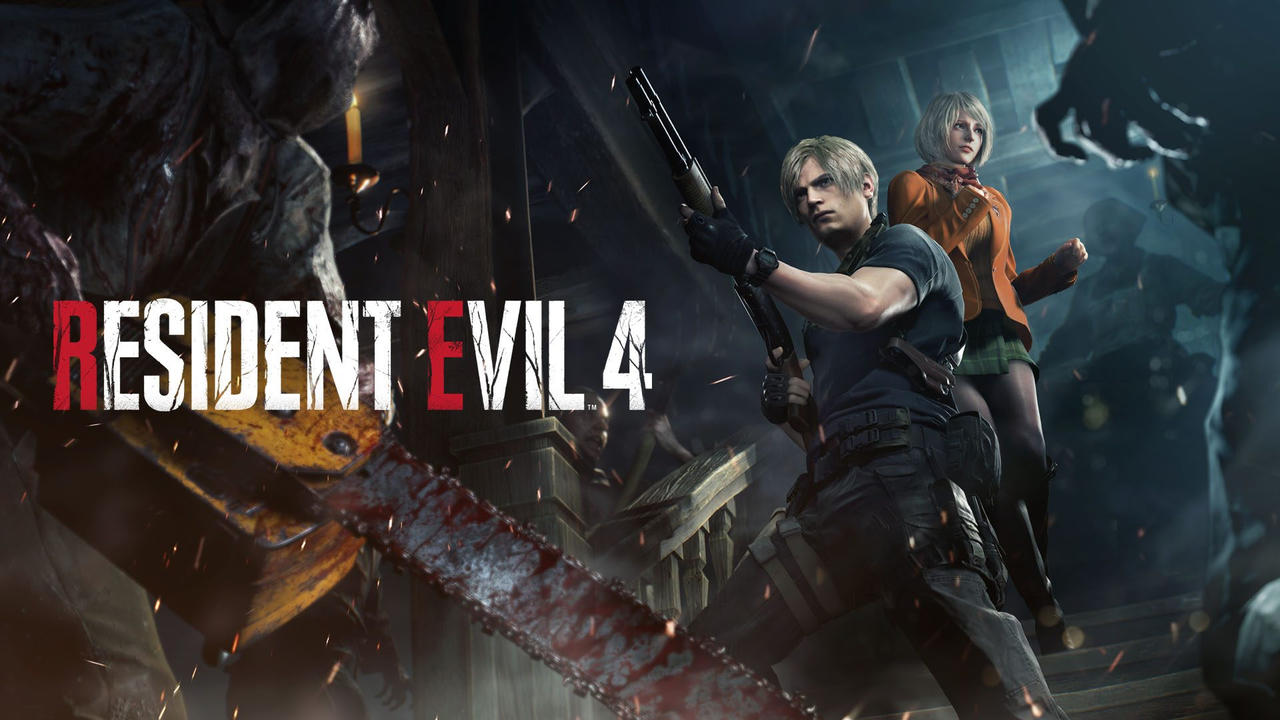
RE4 (2005) pioneered the third-person perspective, soon proving to be the godfather of over-the-shoulder shooters. Remaking it was a massive challenge in itself. But RE4 doesn’t exist in a vacuum. Since the original in 2005 until the remake in 2023, the Resident Evil franchise has changed direction several times.
After the success of RE4, the following two games – RE5 (2009) and RE6 (2012) – were more action-horror than survival-horror. Both sold very well, but some felt the franchise had gradually strayed too far from what initially made it special. This led to another subtle change: RE7 (2017), RE2 (2019), and RE Village (2021) brought the franchise back to its survival-horror roots.
Then Capcom went back to action-horror for the RE4 remake in 2023. Another tonal change must have been a challenge by itself, but moreover, Capcom was attempting to recreate perhaps the most beloved Resident Evil game. Yet the company had already shown it had a sixth sense for remaking games. RE2 was a full reimagining of a decades-old title and was universally lauded. However, remaking RE4 was perhaps even tougher than RE2. Its original is more recent, meaning Capcom had less creative freedom: RE2, released in 1998, needed a full makeover, whereas RE4 held up quite well. Capcom’s challenge: How do we keep the game’s spirit intact while also bringing it up to speed for a modern audience?
Much has changed for Resident Evil in recent years: first-person versus third-person, survival horror versus action horror, co-op versus solo gameplay, et cetera. But what recent history shows is Capcom’s ability to iterate with each release, and why it’s so important to take calculated risks.
This was on full display with the RE4 remake. The fact that Capcom was able to pull it off so magisterially is a testament to its caliber as a developer. Here’s how it did it, starting with gameplay.
Gameplay in the Resident Evil 4 Remake
“If we remade the game so players do the exact same thing as the original, that’s not really going to be fun or interesting,” Kazunori Kadoi, Resident Evil 4 Game Director.
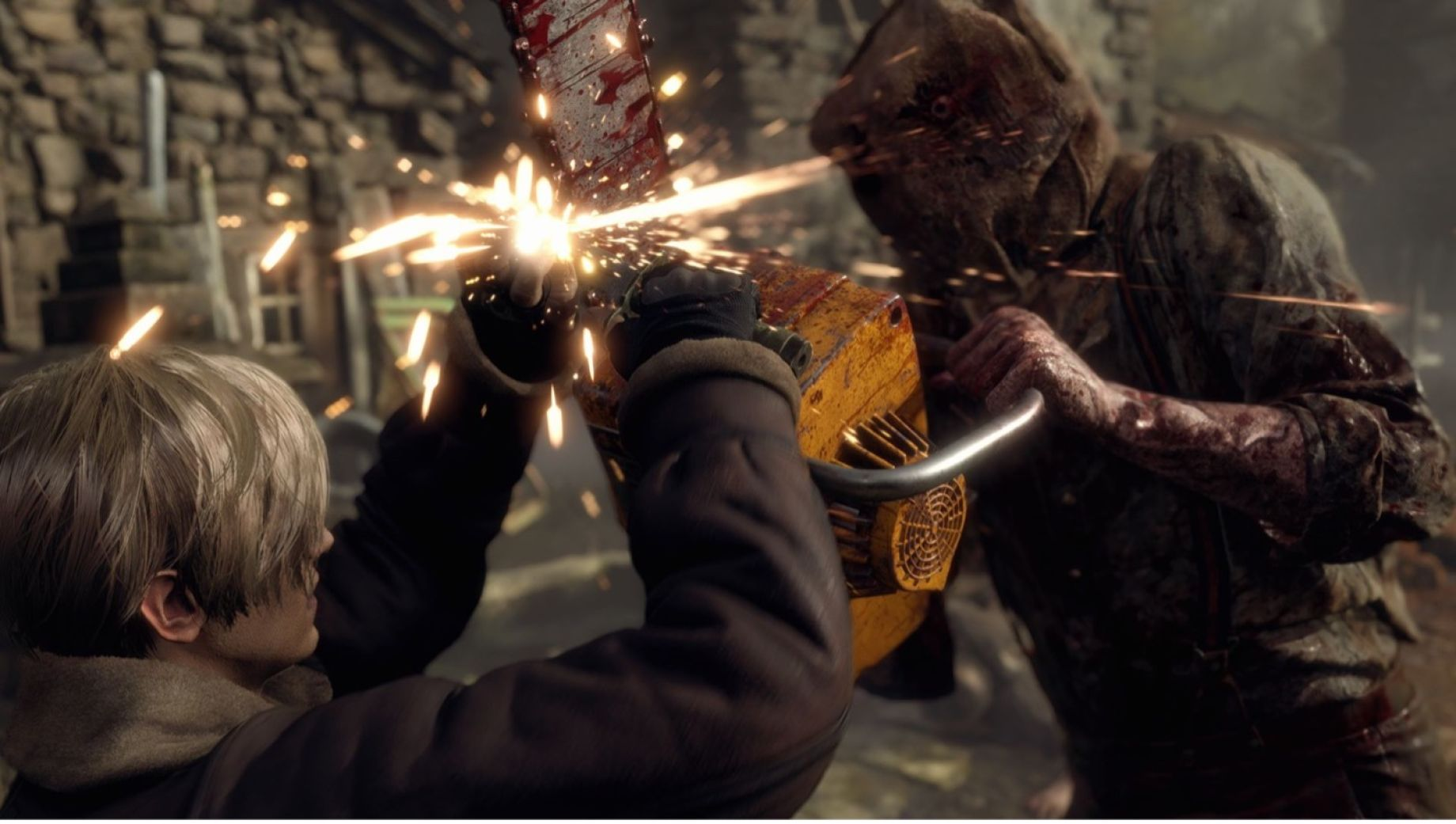
Back in 2005, the player couldn’t move while aiming their weapon in Resident Evil 4. Capcom didn’t want to enter the “shooting/army-type genre”. But in 2023, this fixed-camera gunplay felt clunky and unusual. Capcom knew it had to change some core elements of combat.
In 2023 the player can move while aiming and shooting. But in order for Leon not to be too powerful, enemies were made faster and more aggressive, and there were more of them.
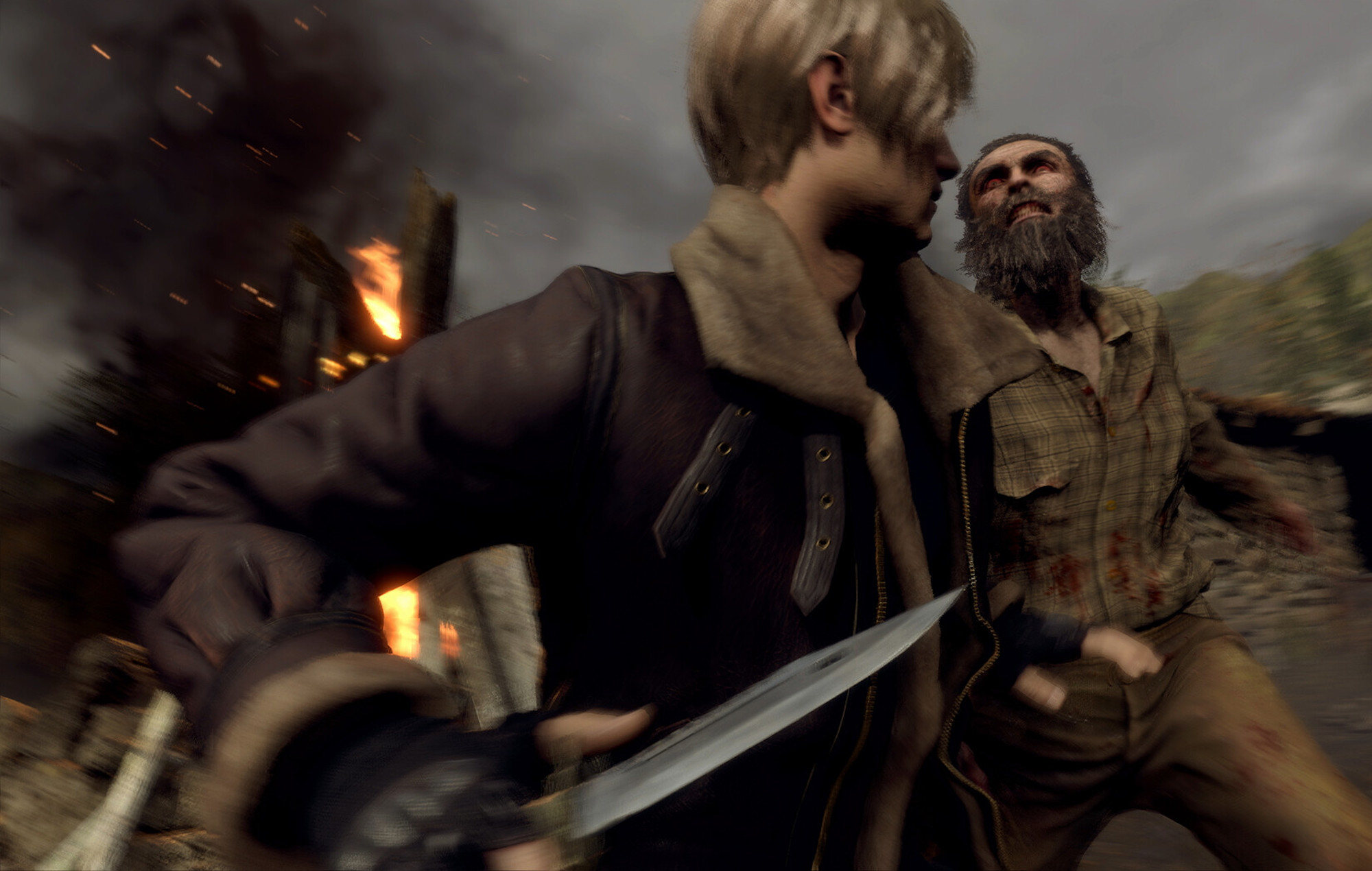
Accordingly, to help the game’s flow Leon now has a parry ability. Parrying is fluid and gives the player more opportunities to unleash Leon’s signature melee attacks. However, to “keep a sense of tenseness”, the knife Leon uses to parry can now break. This adds a strategic element to the new-look melee combat.
“In modern games, even regarding combat there’s more than just fighting. You can escape, use stealth; there’s lots of choices,” Yasuhiro Ampo, Director, Resident Evil 4 (2023).
Other flawed or outdated elements, like quick-time events (QTEs) were removed. Instead, Capcom made such actions available during regular gameplay. Escorting Ashley was one of the original’s few bugbears, which is largely resolved in the remake.
Art Direction in the Resident Evil 4 Remake
Resident Evil 4’s art direction was overhauled. It now has a grittier, darker tone. There are fewer cocky quips from Leon, the protagonist (though they weren’t removed entirely). Visual assets like characters and environments were imbued with rich grimy detail that wasn’t possible in 2005.
Before:
.png)
After:
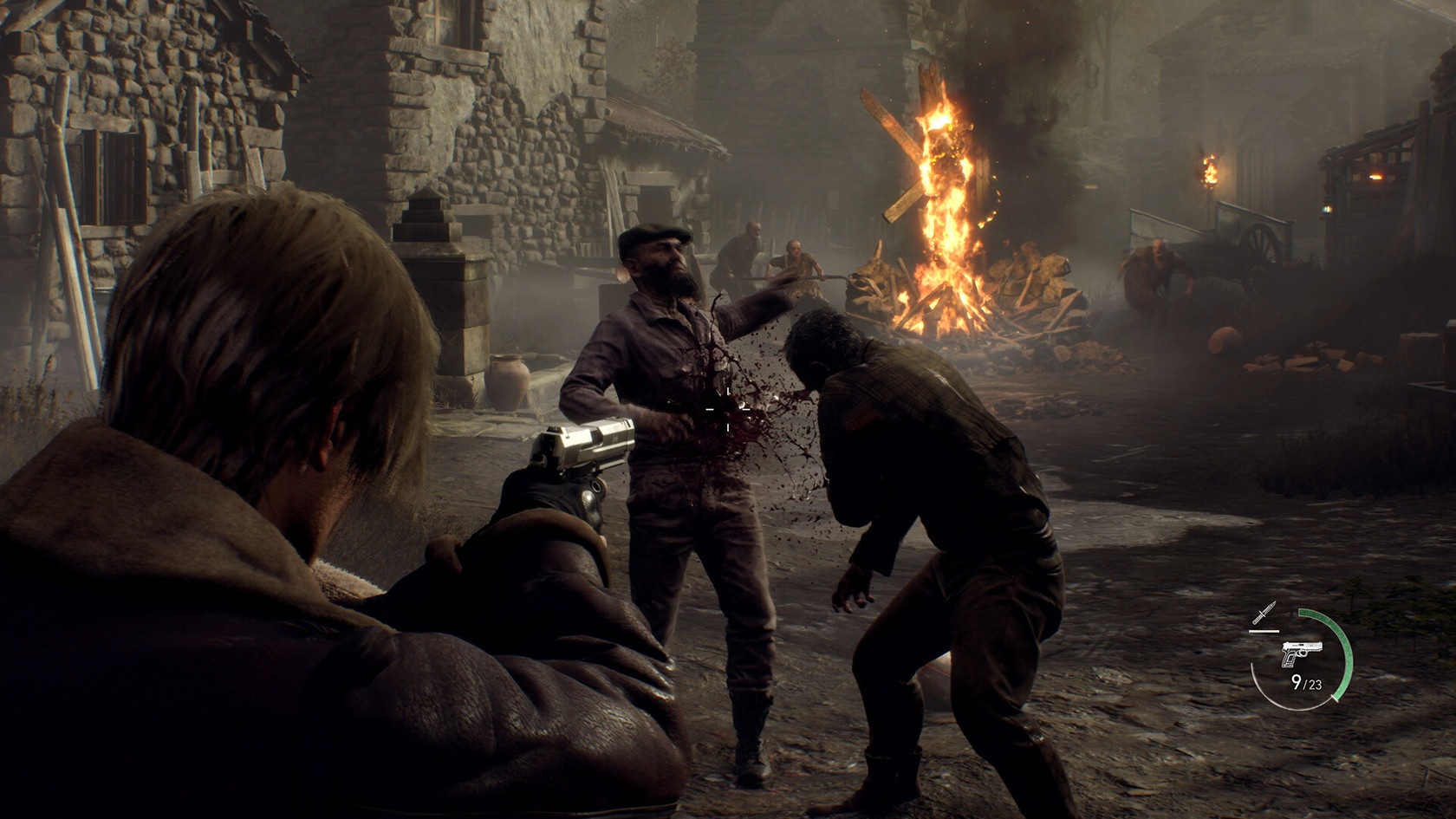
The color palette was made deeper, richer, and more varied. It finally tore away from the gray-brown palette plaguing PS2- and PS3-era games. Keeping with the realistic tone, colors, and patterns feel better researched. All this makes for a more believable rural Spanish setting.
Lighting was leveraged to create a scarier, tenser atmosphere. Capcom played with lighting and shadow to a much larger degree to add to the sense of terror. (A theme that runs through good remakes is a much deeper use of lighting, making full use of modern capabilities.)
Environment and character design was reimagined with more complexity and updated to be scarier than the original. Buildings feel more lived-in. Layouts of spaces like the castle were made more maze-like.
Resident Evil 4: A Tour de Force
.png)
Resident Evil 4’s remake is a lesson in why you should prioritize the present-day experience over nostalgia – even if that means changing the core parts of a classic.
The original is an all-time-great, beloved game. Capcom could have kept it the same so as not to upset long-time fans, and many devs would have. But it had a vision of how the game could be improved with modern capabilities. Subtle yet foundational tweaks, like the added knife-parry ability and the fact players can now move while shooting, look like masterstrokes. Capcom was prepared to take calculated risks to make the experience as gratifying for a modern audience as the original was in 2005.
Resident Evil 4 is just one type of remake. It is perhaps the best example of how to, in some ways, drastically change art direction and gameplay. Others, like Shadow of the Colossus or Metroid Prime Remastered, show how to stay faithful to an original while ensuring the experience isn't stale. Some need to add or remove gameplay elements, others may reimagine their art direction. Every case is different.
Source: 80 Level
https://80.lv/articles/analyzing-the-gameplay-art-direction-of-the-resident-evil-4-remake