HỘI AN IN HỘI AN CHRONICLES VR: ECHOES OF A GLORIOUS TRADING PORT
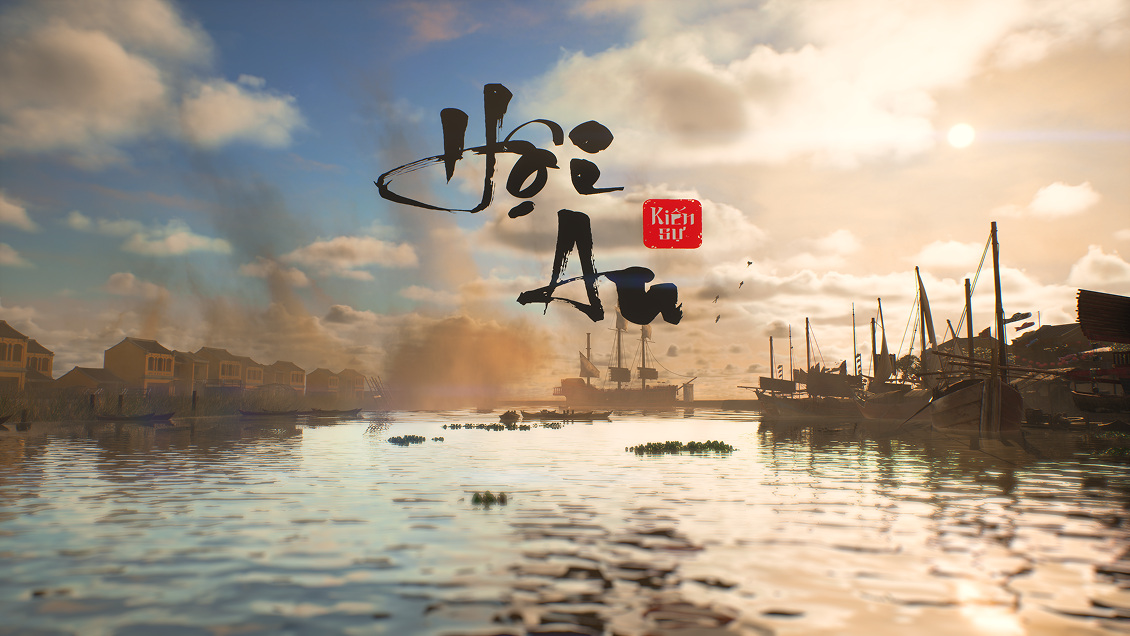
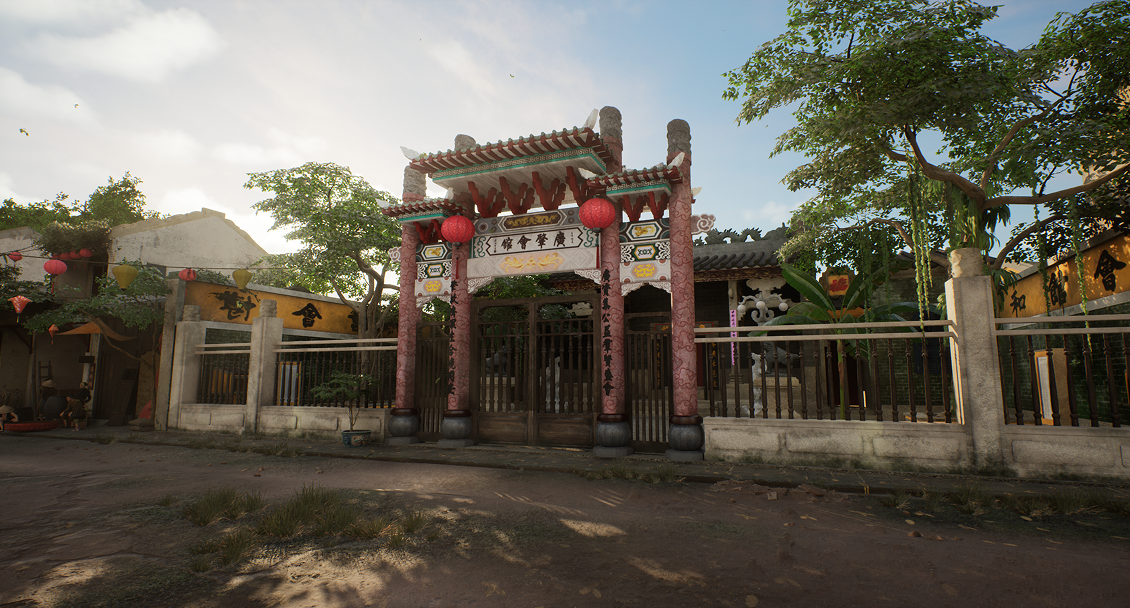
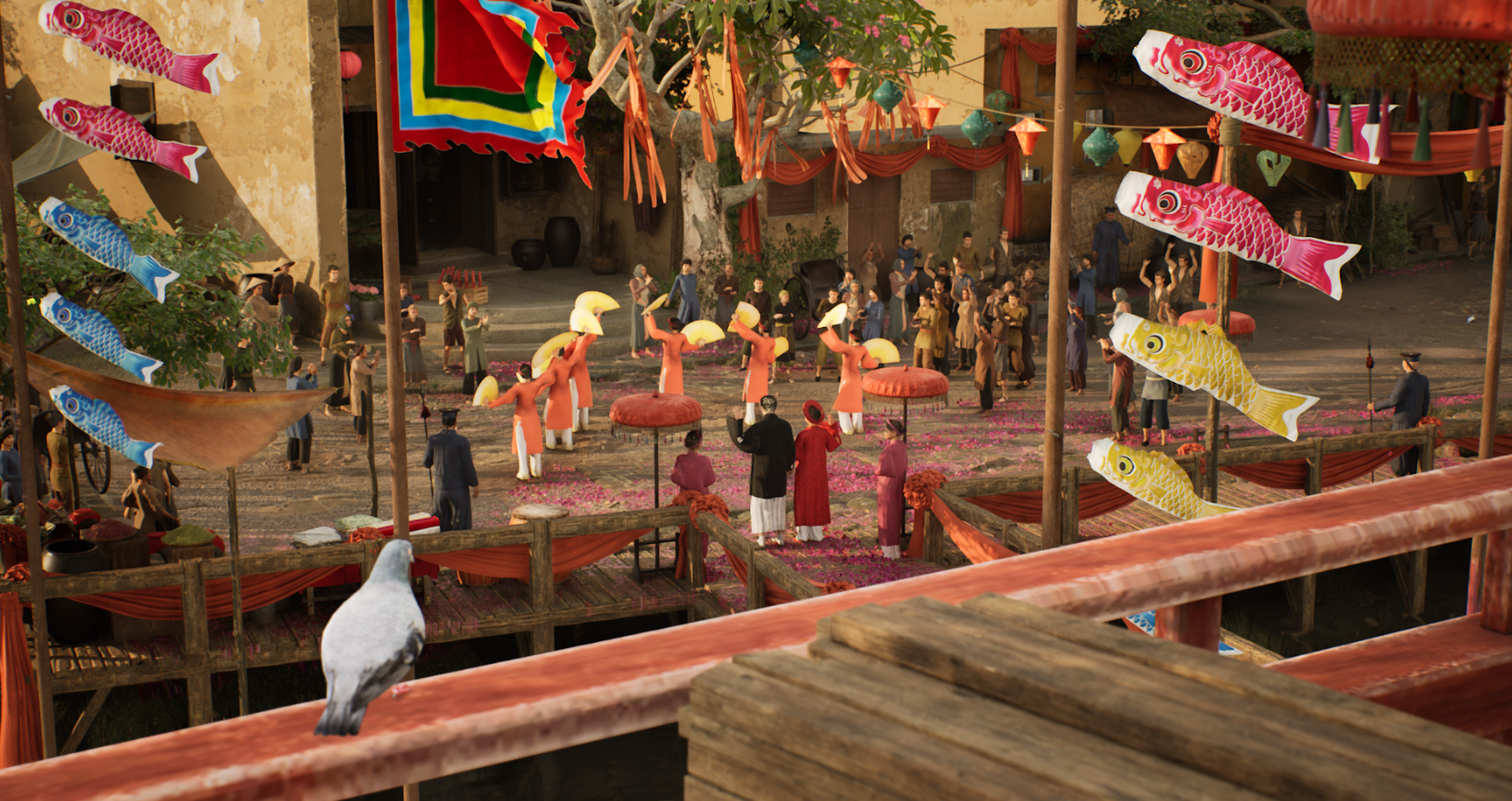
In Click Studio’s VR game Hội An Chronicles, players travel back in time to the ancient town of Hội An as it stood hundreds of years ago, during the 17th and 18th centuries.
Post Category: Project
Every street corner, every moss-covered roof tile of modern Hội An feels like a gateway into the past. But to truly grasp the soul of this land, one must return to those centuries when the ancient town was in its radiant golden age—a bustling international trading hub and one of Southeast Asia’s most important ports. It is not only a story of economic prosperity but also an epic of cultural exchange, human destinies, and a heritage that has endured the turbulent currents of history.
Historical Context: The Rise of a Legend
The history of Hội An’s trading port is bound to the great upheavals of the Vietnamese nation. In the 17th century, amidst the Trịnh–Nguyễn civil war, Nguyễn Hoàng led his family across the Hoành Sơn mountain range into the South and chose Hội An as the strategic gateway to engage with the outside world. Though it came later than Hiến Street in the North, Hội An of the Inner Realm (Đàng Trong) quickly surpassed it in both vitality and success.
Records depict 17th–18th century Hội An as a thriving port town where the sea, rivers, and people converged into a vibrant rhythm of trade. It was also a cultural crossroads, where goods and lives from across Asia intertwined seamlessly.
This prosperity was no exaggeration. The scholar Lê Quý Đôn, in his book ‘Phủ biên tạp lục’ (1776), marveled at Hoi An’s unmatched wealth:
"Ships returning from Sơn Nam (the North) carried only one commodity—dyewood; those from Thuận Hóa (Phú Xuân) only one—pepper. But from Quảng Nam (Hội An), there is no product that cannot be found."
This remark paints a vivid picture of Hội An’s power as a marketplace where the entire world converged.
Archaeologists have uncovered countless artifacts: Chinese bronze coins predating the Common Era, Middle Eastern ceramics, Japanese porcelain, and Chu Đậu pottery from northern Vietnam. Alongside these are ancient Chăm wells, temples, and tombs—evidence that Hội An was a land of millennia-old heritage, a place layered with cultures no less significant than the ancient cities of Luy Lâu or Đại La.
The Economic Heart: A Port That Never Slept
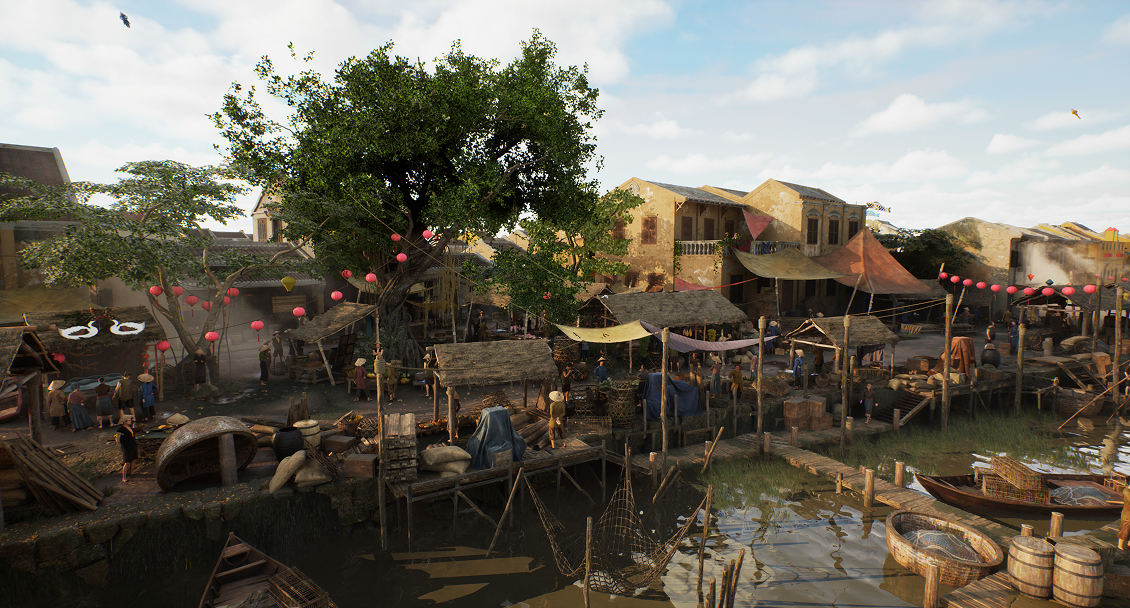
To step into Hội An of the 17th–18th century is to enter a cosmopolitan, multi-ethnic world, pulsing with life carried on the masts of merchant ships from across the seas.
For more than 500 years, traders from all corners of the globe crossed vast oceans to Hội An to exchange and acquire goods. The largest communities were Japanese and Chinese merchants. They established trading houses, built neighborhoods, and even intermarried with locals. Thus, Hội An played a crucial role in Vietnam’s history of trade, from the Trịnh–Nguyễn wars through the Tây Sơn uprising, into the Nguyễn dynasty, and until the French colonial period.
As one of the vital stops on the Maritime Ceramic Route and a key link in the East–West trading network, Hội An became indispensable for ships from Japan, China, the East Indies, Siam, Manila, and even Europe. Western, Japanese, and Chinese merchants alike described its harbor as a “forest of masts,” so dense were the ships anchored during trading seasons. The port was not only a place of commerce but also a customs hub, a center of news and cultural exchange, and a gateway through which new materials and ideas flowed into the region.
Japanese Imprint and the Red Seal Ships
The rise of the Japanese community in Hội An was closely tied to a unique opportunity in trade. In 1567, when the Ming dynasty of China relaxed its “closed-port” policy yet continued to ban the export of key raw materials to Japan, the Japanese shogunate was forced to find a new route. They issued licenses for Shuinsen—the so-called Red Seal Ships, named after the vermilion-stamped permits—to sail to Southeast Asia to purchase Chinese goods. Among their destinations, Hội An quickly became the most favored port.
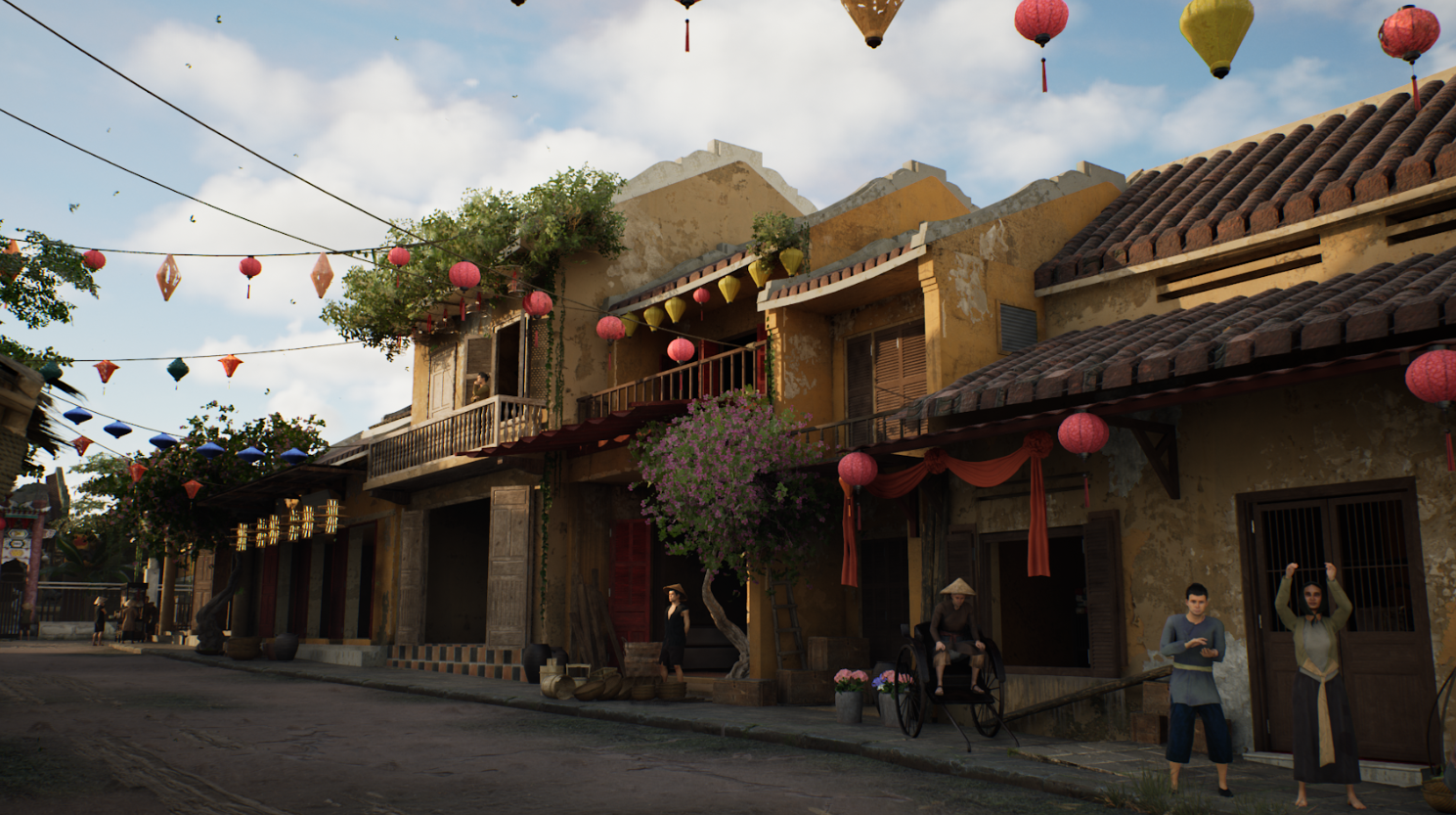
Over the course of thirty years (1604–1635), as many as seventy-five Red Seal Ships docked at Hội An—far surpassing the thirty-seven that arrived in Tonkin (Outer Realm). Japanese merchants brought with them copper, iron, bronze coins, and household goods, and in return they purchased silk, sugar, and most notably, agarwood. By around 1617, a bustling Japanese quarter had taken shape, reaching its height of prosperity. Surviving records and maps allow us to envision stately wooden houses two or three stories high—some even constructed from stone as protection against fire—standing shoulder to shoulder along the riverbank.
The Rise of the Chinese and the Era of the Tang Dynasty
However, the golden age of the Japanese did not last forever. The Tokugawa shogunate’s isolationist policy, coupled with the Nguyễn lords’ suppression of Japanese Christians, gradually dimmed the vitality of the Japanese quarter. Though a small number of Japanese remained, the dominant role in trade slowly shifted into the hands of the Chinese.
The Chinese had known of Hội An long before, but they only began to settle and establish streets after the upheaval of the Ming–Qing transition in the mid-17th century. They quickly stepped into the role once held by the Japanese, taking control of commerce and transforming Hội An into a hub where foreign goods were concentrated. The riverside district, called the Đại Đường Quarter, stretched some three to four miles, its shops never without customers. Most of the residents were Fujianese, still wearing the garments of the Ming dynasty. Many married local women, creating the Minh Hương community, a group deeply rooted in this land.
The English envoy Thomas Bowyear, when visiting Hội An in 1695, captured this transition vividly:
“This town of Faifo… except for some four or five houses belonging to the Japanese, the rest are all in the possession of the Chinese. Now, the principal role in trade has shifted to the Chinese.”
Unparalleled Wealth
Hội An’s prosperity was not only evident in the flow of people and goods but also in the luxurious standard of living of its inhabitants. The Jesuit missionary Christoforo Borri, who lived in Hội An in 1618, described a great market that lasted four months each year, where the Japanese brought tens of thousands of taels of silver, and Chinese junks arrived laden with the finest silk. He emphasized that it was through this market that the king collected immense taxes, from which the entire kingdom benefited.
This wealth permeated daily life. Lê Quý Đôn marveled at the scene of extraordinary affluence: mandarins living in intricately carved houses filled with brassware and precious woods; common folk dressed in satin and silk; soldiers reclining on bamboo mats, drinking fine tea; women wearing embroidered gauze garments. People “regarded gold and silver as sand, rice as mud, indulging in utmost luxury.”
The prosperity also sprang from the fertile agriculture of Quảng Nam, whose rich soil yielded three rice harvests a year, alongside an abundance of resources ranging from agarwood and ivory to pepper and salted fish.
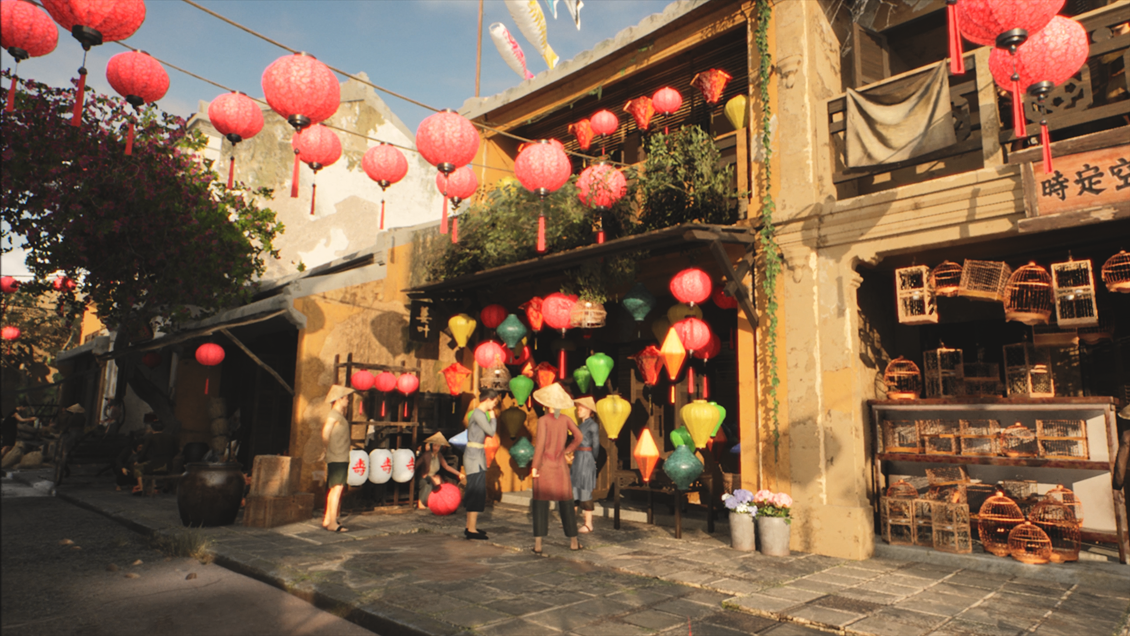
Echoes of a Glorious Age: Decline and Enduring Legacy
Every banquet eventually comes to an end. By the late 18th century, Hội An’s brilliance began to fade. The Tây Sơn uprising and the Trịnh army’s occupation of Quảng Nam in 1775 plunged the port into chaos and warfare. The Trịnh forces destroyed merchant houses, leaving only religious structures intact. Many wealthy merchants—especially the Chinese—migrated southward, bringing their wealth with them to establish new lives in Saigon–Chợ Lớn, leaving behind a desolate Hội An. In 1778, an Englishman named Charles Chapman lamented as he witnessed “a scene of desolation… those edifices now remain only in memory.”
Though Hội An gradually revived afterward, it never regained its former stature. By the 19th century, the Cửa Đại estuary had silted up, preventing large ships from entering the harbor. Alongside the Nguyễn dynasty’s restrictive trade policies and the rise of Đà Nẵng under French colonial rule, Hội An’s commercial activities withered entirely.
And yet, it was precisely during this quieter period that the silhouette of today’s Old Town took shape. New houses built by Vietnamese and Chinese residents, reflecting their architectural traditions, erased traces of the Japanese quarter but gave rise instead to a unique and harmonious architectural legacy.
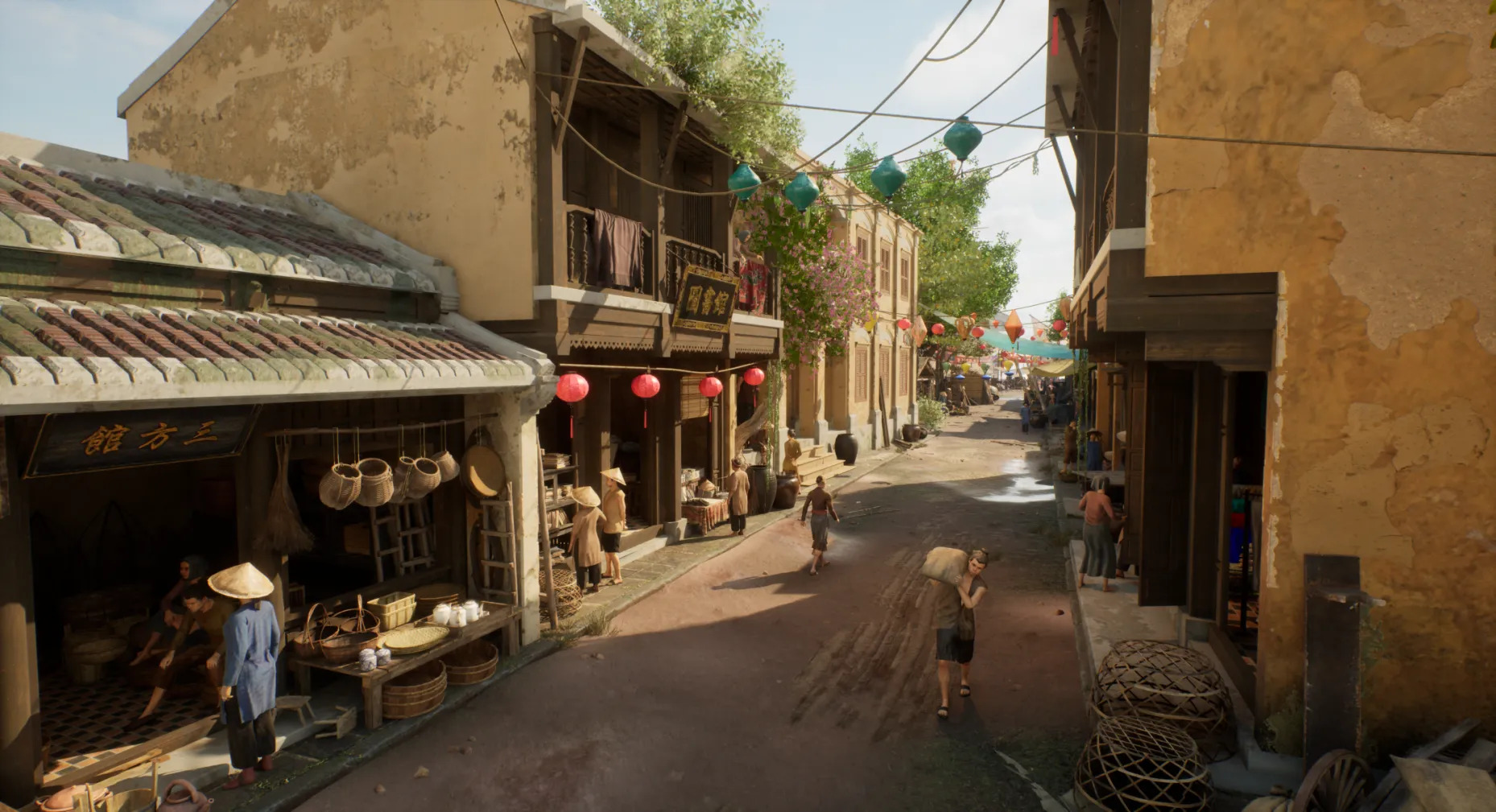
Hội An of the 17th and 18th centuries remains one of the most radiant chapters in Vietnam’s history—a testament to an era of openness, integration, and prosperity. Though no longer an international trading port, its soul endures. Walking the narrow streets today, one can still hear echoes of the past: of Japanese, Chinese, and European merchants, and still feel the pulse of a harbor that once prided itself on “having nothing that could not be found.”
Through the VR project Hội An Chronicles, we at Click Studio hope to bring a glimpse of that flourishing age of Hội An to our players.
